
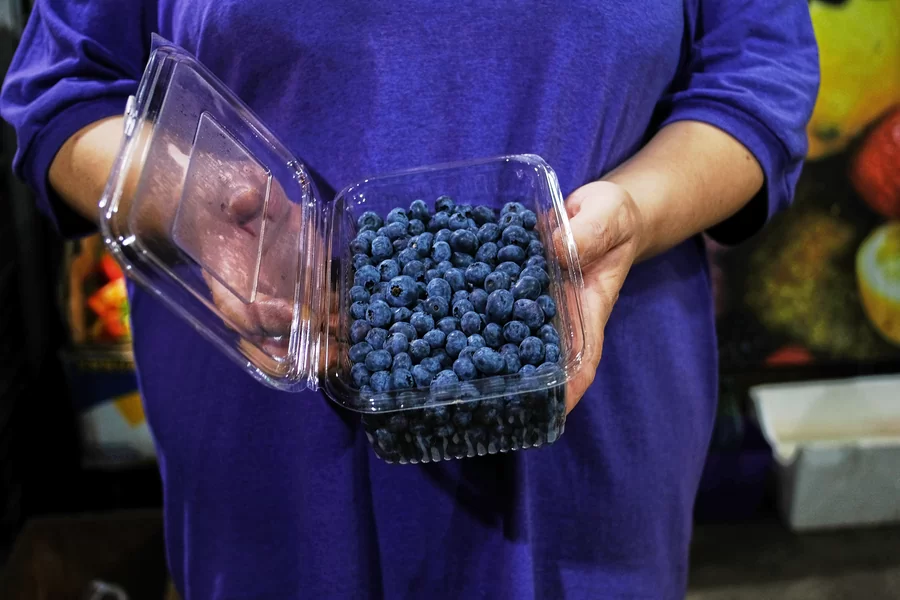
The landscape of food safety in early 2026 has been significantly altered by a major regulatory escalation. What began as a routine safety check has now intensified into one of the most critical compliance challenges for the frozen produce industry this year. Federal regulators have officially upgraded the ongoing blueberry recall to a Class I designation, signaling a high-risk scenario that demands immediate attention from legal counsel, supply chain managers, and food processors across North America.
This comprehensive breakdown explores the regulatory mechanics, the microbiological risks, and the multi-layered legal exposure facing businesses involved in this developing crisis.
Understanding the Class I Escalation: Beyond the Headlines
The transition of this recall from a voluntary withdrawal to a Class I event is not merely a bureaucratic change; it is a legal red flag. Under FDA guidelines, a Class I classification is reserved for situations where there is a “reasonable probability that the use of or exposure to a violative product will cause serious adverse health consequences or death.”
The technical trigger for this upgrade was the discovery of Listeria monocytogenes in approximately 55,689 pounds of frozen product. While the initial recall was initiated by Oregon Potato Company LLC (operating as Willamette Valley Fruit Company) on February 12, 2026, the subsequent reclassification on February 24 reflects a more severe assessment of the contamination’s potential reach and virulence.
For a business, this classification shifts the burden of proof in potential litigation. It creates a regulatory record that the product was “adulterated” under the Federal Food, Drug, and Cosmetic Act, making it significantly harder to defend against strict liability claims in a court of law.
The Geography of Risk: Supply Chain and Distribution Scope
One of the most complex aspects of this 2026 incident is its distribution footprint. Unlike retail-level recalls where consumers can be reached through grocery store loyalty programs, this specific event occurred deep within the business-to-business (B2B) infrastructure.
The affected lots were distributed across several key regions:
-
United States: Michigan, Oregon, Washington, and Wisconsin.
-
International: Significant shipments reached Canadian markets.
Because these blueberries were not sold directly in consumer-facing packaging, the primary risk lies in “secondary contamination.” Many of these bulk frozen units were intended for use as ingredients in other products ranging from bakery goods and smoothies to dairy inclusions.
For companies downstream, the legal challenge is identifying whether their finished goods now contain the contaminated raw material. This “ripple effect” often leads to derivative recalls, where a dozen different brands may be forced to pull products because of a single contaminated source.
The Microbiological Threat: Why Listeria Mandates High-Level Legal Concern
In food safety litigation, not all pathogens are treated equally. While some bacteria cause temporary gastrointestinal distress, Listeria monocytogenes is uniquely dangerous. This bacterium is known for its “hardiness” it can survive and even grow in cold, damp environments like industrial freezers, which makes the frozen blueberry sector particularly vulnerable.
From a liability standpoint, Listeria cases are high-stakes for several reasons:
-
Vulnerable Populations: It disproportionately affects the elderly, the immunocompromised, and pregnant women.
-
Latency Period: The symptoms can take up to 70 days to appear, making it difficult for businesses to trace the exact point of consumption.
-
Severity of Damages: Listeriosis can lead to meningitis and life-altering neurological damage. In a legal context, this translates to massive compensatory and potentially punitive damages if negligence in “Preventive Controls” can be proven.
Critical Traceability: Lot Numbers as Legal Evidence
For risk managers, the first line of defense is precise documentation. The 2026 recall centers on specific production windows that must be verified against internal shipping logs. The primary evidence in any upcoming litigation or insurance claim will revolve around these identifiers:
30-pound Corrugated Cases:
-
Lot Identifiers: 2055 B2, 2065 B1, 2065 B3
-
Shelf-Life/Expiration: July 23–24, 2027
1,400-pound Totes (Industrial Scale):
-
Lot Identifiers: 3305 A1, 3305 B1
-
Shelf-Life/Expiration: November 25, 2027
The extended expiration dates (stretching into 2027) mean that the legal exposure is not short-term. If a business fails to purge these lots from its system now, a liability event could occur a year from today, making the company appear even more negligent for failing to act on the 2026 warnings.
Regulatory Compliance and the FSMA Framework
Under the Food Safety Modernization Act (FSMA), the FDA has broad authority to inspect facilities and demand records.
This recall acts as a “stress test” for a company’s Foreign Supplier Verification Programs (FSVP) and its Hazard Analysis and Risk-Based Preventive Controls (HARPC).
Legal teams should be asking:
-
Was the environmental monitoring program at the Salem, Oregon facility sufficient to catch Listeria before the product was shipped?
-
Did the secondary distributors have a robust “Recall Plan” as mandated by federal law?
-
Is there a gap in the chain of custody that could allow contaminated product to remain in the marketplace?
Failure to provide documentation of “Corrective Actions” during an FDA audit can lead to Warning Letters, consent decrees, or even criminal charges under the Park Doctrine, which holds corporate officers responsible for food safety violations regardless of their intent.
Insurance Recovery and Contractual Indemnity
The financial fallout of a Class I recall usually eclipses the physical value of the product.
The real costs lie in the logistics of the withdrawal, the destruction of inventory, and the loss of business continuity.
Most standard commercial general liability (CGL) policies are insufficient for a crisis of this magnitude. Specialized Product Withdrawal Insurance is typically required. In the coming months, we expect to see a surge in “Indemnity Disputes” where distributors sue producers to recover the costs of their own brand damage and operational disruptions.
Cross-Border Complications: Canada and the CFIA
Because the distribution reached Canada, the 2026 blueberry recall is an international legal matter.
The Canadian Food Inspection Agency (CFIA) operates under different statutory timelines than the US FDA.
Companies must navigate two different sets of reporting requirements. A statement made to US regulators could be used against the company in Canadian civil court.
Coordination between US and Canadian counsel is not just recommended it is essential to ensure that the defense strategy is harmonized across the border.
Corporate Governance: The Board’s Responsibility
In 2026, food safety is a “Board-level” issue. Shareholders are increasingly filing derivative lawsuits against directors who fail to oversee food safety risks adequately.
A Class I recall is a material event that should be reported to the board’s audit or risk committee.
Transparency is the best defense against reputational collapse. While “silence” might seem like a way to limit legal admissions, in the age of rapid digital news (as seen with the early reporting from Fox Business and People), a lack of communication is often interpreted by the publicand juries as a lack of care.
Conclusion
This incident serves as a stark reminder that the frozen food industry remains under intense scrutiny. As testing technology improves and the FDA’s “New Era of Smarter Food Safety” initiative moves forward, recalls will be identified faster and classified more severely.
For businesses, the takeaway is clear: Traceability is your strongest legal shield. Knowing exactly where every pound of product went can mean the difference between a targeted, manageable withdrawal and a catastrophic, company-ending litigation cycle.
FAQ
1. What makes the 2026 recall different from previous years? The speed of the Class I upgrade and the specific focus on large-scale industrial totes (1,400 lbs) suggest that the contamination happened early in the processing chain, affecting bulk ingredients rather than just retail bags.
2. If my business used these berries in a cooked product, are we still at risk? While Listeria is generally killed by high heat, the legal risk remains if cross-contamination occurred in your facility before the cooking process. You must document your “kill step” validation to mitigate liability.
3. What is the first step a business should take if they identify these lot codes? Immediately “quarantine and hold” all remaining inventory. Do not destroy it until you have consulted with your insurance carrier and legal counsel, as the physical product may be needed for independent laboratory testing.